
Jump to section
Most of our clients ask about driving in the first week. Can I use my own license? What is the insurance actually called? What do I hand over at a police stop? And do I really need a 4x4? This is the plain version, with the law cited where it matters and “ask us” where the rules are not clear.
It sits alongside our moving-to-Nicaragua checklist, which covers the rest of the paperwork. We keep it practical on purpose. Where we could not verify a number, such as current license fees, we say so instead of guessing.
 The short answer
- Your home license generally works for as long as it is valid, under Ley 431 Art. 144. An International Driving Permit is not legally required.1,2,3
- A Nicaraguan license needs legal residency first. Fees change, so check at Tránsito or ask us.4,6
- The mandatory cover is third-party liability (seguro obligatorio). It does not cover your own car.1
- Carry your license, vehicle papers and proof of insurance. Be calm and polite at every retén.
- After an accident with injuries, the driver is commonly held until the case is processed or settled. Call your insurer and a bilingual helper.
- You need a high-clearance vehicle only if your road is unpaved. Check the access road before you choose.12
Driving in Nicaragua by the numbers




Can you drive on your foreign license?
Yes, generally. Article 144 of Ley 431, the traffic law, is quoted by two secondary sources as recognizing a foreign license for as long as it remains valid in your home country, with no fixed number of days.1,2,3 We could not reach the original Gaceta text ourselves, so treat this as well supported, not guaranteed, and confirm it before a long stay.
You will see a “30 days” rule repeated online. It is a mix-up. The 30-day window in Ley 431 Art. 68 concerns insuring a vehicle with foreign plates, not the validity of your license.1 The two get conflated constantly.
You do not legally need an International Driving Permit. Nicaragua is not party to the 1949 Geneva or 1968 Vienna conventions, and the sources we found say none is required.2,3 Still, a permit is cheap at home and carries your details in Spanish. A rental counter or insurer may ask for one, so we suggest bringing it.
Landing soon and want a driver?
We arrange airport transfers and drivers for your first weeks, so you can learn the roads before you take the wheel.
Getting a Nicaraguan license
Most visitors never need one. Once you are a legal resident, though, many expats switch to a local licencia de conducir, because it simplifies renewals and rental rules. One expat guide says a local license requires legal residency first, and that tourists keep driving on their home license.4
That same guide describes the sequence below. It is the only granular account we found, and its costs contradict each other, so we use it for order, not prices.4 La Prensa also ran its own explainer for Nicaraguans in November 2025.5
A medical and eye exam
Done at a Red Cross facility, per the guide.4
Study the driver’s handbook
The written test is in Spanish only. A bilingual helper is worth having here.4
A short road test, then issuance
A brief practical test, then the card is issued, valid for five years in the guide’s account.4
Mandatory insurance versus full coverage
Nicaragua’s law uses its own words. The mandatory cover is the Seguro de Responsabilidad Civil por daños a terceros, in Ley 431 Art. 63, and local people call these the seguros obligatorios.1 It is third-party liability: it pays for harm you cause to other people and their property. It does not repair your car or cover your own injuries.
Ley 431 Art. 69 sets statutory minimums per person injured, for two or more people, and for property damage. They are low by modern standards and come from a scanned text we could not fully check, so confirm the current minimums with an insurer.1 Driving without the policy is fined at C$1,500 for a light vehicle (C$500 for a motorcycle, C$3,000 for a heavy vehicle).7
Two kinds of coverWhat each does, in short
| Seguro obligatorio | Full coverage | |
|---|---|---|
| Required by law | Yes (Ley 431)1 | No |
| Pays for others’ injuries and property | Yes, up to the minimums | Yes, at higher limits |
| Repairs your own car | No | Yes, per policy terms |
| Fine if missing, light vehicle | C$1,5007 | None |
If you rent, read the contract. Avis Nicaragua’s conditions show the third-party liability add-on is not in the quoted rate. A collision waiver (CDW) is optional and, if you buy it, caps your collision liability at US$1,000, while without it you owe the full vehicle value. Some credit cards offer coverage with limitations, so check yours first.11 One traveler’s January 2026 road-trip account mentions a mandatory insurance surcharge added at the counter.16 Local agencies set their own terms, so ask for them in writing.
For a car you own, we can get you quotes for both the obligatory cover and full coverage through our insurance service. We will not quote a monthly price here, because it depends on the vehicle and insurer.
Police checkpoints: what to carry
A police stop is a retén, and the term appears in both the traffic law and current police announcements.1,17 You will meet them on main roads. Most stops are routine document checks. One traveler’s account describes a polite stop over a wrong-way turn that Google Maps had suggested.16
What to keep within reachBefore you start the engine
| Document | Why |
|---|---|
| Driver’s license (licencia de conducir) | Your right to drive1,7 |
| Vehicle circulation card (licencia de circulación) | The car’s registration7 |
| Proof of the mandatory insurance | Required; missing it is a fine7 |
| Passport or a clear copy | Identifies you as a foreigner and shows your entry |
| Rental contract, if renting | Shows you are authorized to drive the car |
- Pull over when asked, switch the engine to idle, keep your hands visible and be courteous.
- Keep the paperwork in one folder so you are not rummaging.
- If you are given a ticket, ask for the written boleta de infracción, which is the legal term for it.1
- Stay inside the speed limit. It is 50 km/h for cars, whatever the sign says, and plainclothes officers with radar have been reported.8,9
- Do not drive after drinking. Enforcement pushes have led to thousands of suspensions.10

If you have an accident
This is the part we most want you to read before you need it. The aim here is to explain how it works in practice, without drama.
Police attend and document the scene. Traffic procedure sits under Ley 431, and anything involving injuries can move into the criminal process.1 Expats raise the next point often, including in forum questions about whether a driver can really be held after an accident that was not their fault.18 When someone is injured, the driver is commonly held while the case is processed or until a settlement is reached, regardless of fault. This is widely reported in practice. We have not seen it tied to a single article of law, so confirm the details with a Nicaraguan attorney.
Stay, and check on people
Do not leave the scene. Do not move the vehicles if anyone is hurt.
Call for help
Emergency services if anyone is injured. Then your insurer and a bilingual helper. We can be that helper for our clients on the Pacific side.
Have your documents ready
License, circulation card, proof of insurance and passport, as in the table above.
Be calm and say little
Answer questions plainly in your own words. Do not sign anything you do not understand in Spanish.
Get an attorney involved early
The sooner someone who knows the process is beside you, the smoother it tends to go.
Damage-only collisions are simpler, and the insurer handles most of the paperwork. Keep your policy number handy and take photos.
Roads by season, and whether you need a 4x4
The paved highway spine from Managua through Rivas to San Juan del Sur holds up year-round.12,13 Secondary and beach-access roads are often unpaved, and they degrade in the rainy season, which sources place at roughly April or May through November.12,13 A San Juan del Sur real-estate guide recommends 4WD for the unpaved beach-access roads around town.12
Our practical read: look at your own access road. If you live in San Juan del Sur on paved streets, a small sedan is fine. If your house sits up a dirt road, or you want to reach more remote beaches along the Tola coast, ground clearance matters most in the wet months. We cannot name a specific washout from public sources, so ask your landlord or neighbors which stretches flood.
- Avoid driving at night when you can. Roads are shared with bicycles, animals, carts and unlit vehicles.
- Watch for speed bumps without much warning, and for potholes after heavy rain.
- Do not trust a map’s route on unpaved shortcuts in the rainy season.
Rent, lease or buy?
No published analysis answers this for Nicaragua, so the chart below is our own arithmetic, not a quote. We use an illustrative $45 a day, which is a round number to show the shape of the decision. Real rates vary by season, vehicle and agency.
| 1 month | $1,350 |
|---|---|
| 3 months | $4,050 |
| 6 months | $8,100 |
| 9 months | $12,150 |
Compare with a roadworthy used car, which one source puts at roughly US$12,000 to $15,000. Buying adds insurance, upkeep and registration.
Source: Our arithmetic; used-car range from CentralAmerica.com [14]
Renting makes sense for the first months, while you learn the roads and decide where to live. It also lets you test whether you need that 4x4 before you own one.
Buying works if you stay long. Sources put a roadworthy used car at roughly US$12,000 to $15,000 and say anything under $10,000 likely needs work. Toyota and Nissan, diesels especially, are recommended for parts and mechanic familiarity.14,15 One catch: a foreigner without residency cannot register a vehicle in their own name. The workarounds are a Nicaraguan company or a nominee arrangement, and the second carries real legal risk, so talk to an attorney first.14,15
Shipping a car in is another option, but import treatment changed with the 2024 residency-law reforms. Confirm vehicle import rules with an attorney before you commit, and read our guide to customs clearing for a personal shipment. For running costs, see what it costs to live in Nicaragua.
Not sure whether to rent or buy?
Tell us how long you plan to stay and where you will live. We will tell you what usually makes sense and what to ask the rental company for in writing.
Why it is worth getting behind the wheel
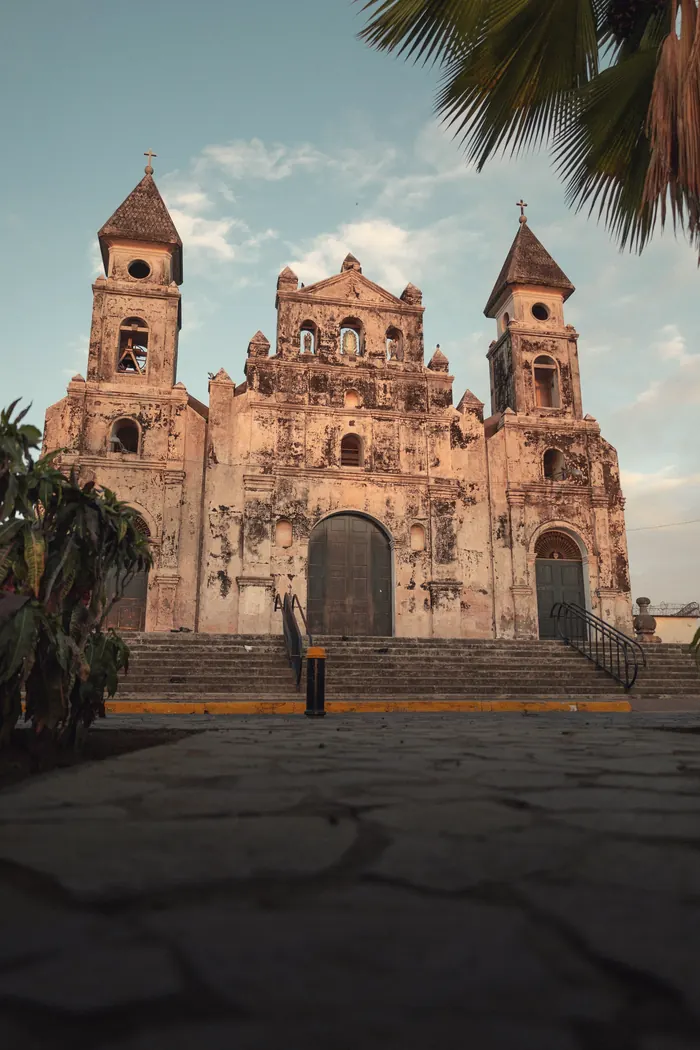
A car is how the area opens up. From San Juan del Sur and Tola you can reach surf beaches at dawn, then drive to a sportfishing trip with our tours and fishing partners. Roosterfish and other offshore species are the draw. Weekend road trips also take you to colonial Granada for the day.
It is also how you get to the courts. Pickleball is growing here, and our guide to pickleball in Nicaragua and our pickleball service show where to play. When you want company on the road, the community is full of people who have driven these roads and will tell you which ones to avoid after rain.
Need a driver or a car?
Tell us your dates and where you are headed. We will line up a driver, an airport transfer or help with a rental, and we handle the Spanish.
Got it. Thank you.
One of us will write back, usually within a day. If it’s urgent, message us on WhatsApp and mention your name.
Prefer WhatsApp? Message us · or email [email protected]
Frequently asked questions
Can I drive in Nicaragua on my US or Canadian driver’s license?
Generally yes. A foreign license is commonly described as valid in Nicaragua for as long as it stays valid at home, under Article 144 of Ley 431, with no fixed day limit.1,2 The 30-day figure people repeat online belongs to a different rule, about insuring a foreign-plated vehicle.1 Confirm current practice before you rely on it.
Do I need an International Driving Permit for Nicaragua?
Is car insurance mandatory in Nicaragua, and what does it cover?
Yes. Ley 431 requires a “Seguro de Responsabilidad Civil por daños a terceros”, third-party liability cover, often called the seguro obligatorio.1 It pays for harm to other people and their property, not for your own car. Driving without it carries a fine of C$1,500 for a light vehicle.7 Full coverage for your own vehicle is separate and optional.
What happens if I am in a car accident in Nicaragua?
Police attend and document the scene. If anyone is hurt, the driver is commonly held while the case is processed or settled, whatever the fault. If anyone is injured, do not move the vehicles, call your insurer and a bilingual helper, and keep your documents ready. Ask a Nicaraguan attorney to confirm how the process works for your case, since traffic procedure sits under Ley 431 and the criminal courts.1
Do I really need a 4x4 to live in San Juan del Sur or Tola?
Is it cheaper to rent a car long-term or buy one in Nicaragua?
It depends on how long you stay. At an illustrative $45 a day, a rental passes $12,000 in about nine months, which is roughly where a used car starts.14,15 A car also brings insurance, upkeep and registration rules. Foreigners without residency cannot register a vehicle in their own name.14,15 Our arithmetic is a sketch, not a quote.
Sources
Every number in this article links to one of these. Prices and rules change; we last checked them on November 5, 2026. If you spot something out of date, tell us on WhatsApp and we'll fix it.
- Ley 431, Ley para el Régimen de Circulación Vehicular e Infracciones de Tránsito, y sus reformas (Arts. 3, 26, 51, 63, 68, 69, 144) — Policía Nacional de Nicaragua, law 2003, amended 2014
- Can I Drive in Nicaragua with a Foreign License? — Nica-Biz, Nov 11, 2022, modified Feb 19, 2023
- Nicaragua: driving permit information — International Driving Authority, viewed Nov 2026
- Getting Your Foreigner Driver License in Nicaragua — NicaSeeker, Jul 29, 2025, updated Jul 2026
- Todo lo que necesitas saber para tramitar tu licencia de conducir en Nicaragua — La Prensa (Nicaragua), Nov 14, 2025
- En afán recaudatorio, Policía sube costo de licencia y otros trámites en Tránsito — La Prensa (Nicaragua), Mar 27, 2026
- Trámites en línea: Seguridad Vial (infractions table) — Policía Nacional de Nicaragua, viewed Nov 2026
- Policía impone 50 km/h como nuevo límite de velocidad en las carreteras de Nicaragua — La Prensa (Nicaragua), Jun 17, 2025
- Policías vestidos de civil y equipados con radares para vigilar a conductores — La Prensa (Nicaragua), Jun 26, 2025
- Más de 5,400 licencias suspendidas y 1,700 conductores detenidos — La Prensa (Nicaragua), Feb 25, 2026
- Avis Nicaragua rental conditions — Avis (ABG Latin America), viewed Nov 2026
- How are the roads in Nicaragua? — Aurora Beachfront, undated, viewed Nov 2026
- Nicaragua: transportation — Vianica, undated, viewed Nov 2026
- Buying a car in Nicaragua — CentralAmerica.com, 2023
- Nicaraguan Used Cars — NicaSeeker, 2023
- Driving in Nicaragua: My Real 5-Day Road Trip Experience — Out of Your Comfort Zone, Jan 2026
- Nota de Prensa 006-2025 (retenes) — Policía Nacional de Nicaragua, Jun 19, 2025
- Driving laws in Nicaragua (forum thread on detention after an accident) — Expat Exchange, about 2018 to 2019

Questions about your situation?
We don't run comments here. Drop your question in our Facebook group — 35,000 expats and locals will weigh in, and we'll be there too.